


Copyright © 2024 Wuxi Rigid Machinery Co., Ltd. All Rights Reserved. Sitemap | RSS | XML | Privacy Policy


The MT50 Material Lifting Hoist is engineered to address the operational challenges of vertical material handling in construction, renovation, and industrial maintenance environments. This article provides a structured and technical examination of the MT50 Material Lifting Hoist, focusing on its design philosophy, mechanical parameters, operational workflow, and real-world application scenarios. By adopting a “how” framework, the content explains how the MT50 functions, how it integrates into jobsite processes, and how it aligns with evolving lifting requirements. The article also addresses frequently asked questions, outlines industry references, and concludes with brand context and contact guidance.
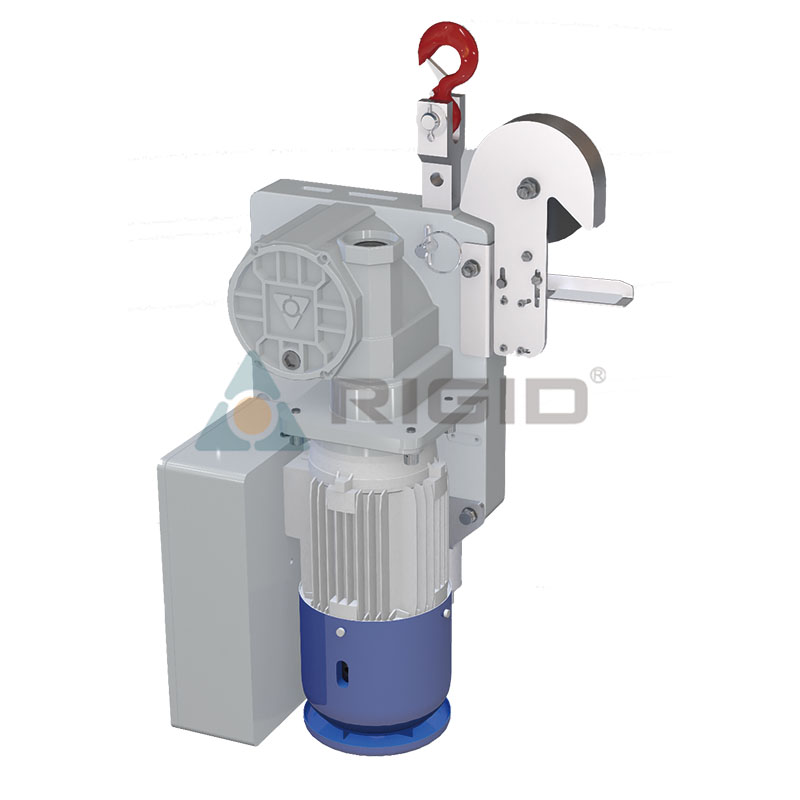
The MT50 Material Lifting Hoist is developed as a compact yet robust lifting solution intended for vertical transportation of construction materials such as drywall panels, boards, piping bundles, and modular components. Its structural configuration reflects industry-standard lifting mechanics combined with portability considerations, allowing deployment in confined or elevated workspaces.
At its core, the MT50 Material Lifting Hoist relies on a stable base frame, a telescopic mast system, and a guided lifting carriage. This configuration enables controlled elevation while maintaining load balance during ascent and descent. The hoist’s mechanical transmission is designed to minimize sudden load shifts, supporting predictable motion control during operation.
From a workflow perspective, the MT50 Material Lifting Hoist is commonly positioned at ground level or on intermediate platforms, where materials are secured to the lifting carriage. Once engaged, the hoisting mechanism raises the load along the mast, allowing operators to align materials with installation points at height. This process reduces manual lifting strain and supports safer material placement.
The design emphasis of the MT50 Material Lifting Hoist centers on adaptability. Adjustable mast sections accommodate varying ceiling heights, while modular components support disassembly for transport. These design elements allow the hoist to integrate into temporary jobsites as well as semi-permanent industrial settings.
Understanding the MT50 Material Lifting Hoist requires a detailed review of its technical parameters. These specifications define operational boundaries and help determine suitability for specific lifting tasks. The following table summarizes representative parameters commonly associated with the MT50 configuration.
| Parameter | Specification Range |
|---|---|
| Rated Load Capacity | Up to 500 kg (application-dependent) |
| Maximum Lifting Height | Approximately 4.5–5.0 meters |
| Mast Configuration | Telescopic, multi-section steel mast |
| Drive Mechanism | Manual winch or electric-assisted system |
| Base Footprint | Wide-leg stabilized frame |
| Material Construction | Powder-coated structural steel |
| Safety Features | Load locking system, guided rails, braking control |
These parameters demonstrate how the MT50 Material Lifting Hoist balances lifting capacity with structural stability. The rated load capacity determines the maximum permissible material weight, while the mast height defines vertical reach. The base footprint contributes to resistance against tipping forces, especially when handling elongated or uneven loads.
Additionally, the drive mechanism influences operational cadence. Manual systems provide precise control in low-frequency lifting tasks, whereas electric-assisted options support repetitive operations. Together, these parameters allow the MT50 to be configured for a wide range of project requirements.
The MT50 Material Lifting Hoist is commonly utilized in construction and industrial environments where vertical material movement is required but space or infrastructure limits the use of larger lifting equipment. Typical scenarios include interior construction, ceiling installations, mechanical system placement, and renovation projects.
In interior construction, the MT50 Material Lifting Hoist supports the elevation of drywall sheets and ceiling panels. Its controlled lifting motion allows precise alignment with framing structures, reducing rework and installation time. In mechanical installations, the hoist assists with positioning ductwork sections, cable trays, or piping assemblies at height.
Renovation projects benefit from the MT50 Material Lifting Hoist due to its transportable design. Components can be moved through doorways, stairwells, and elevators, enabling material lifting in existing buildings without structural modification. This adaptability makes the hoist suitable for both commercial and residential upgrades.
From an operational planning perspective, the MT50 Material Lifting Hoist aligns with modern jobsite efficiency objectives. By reducing reliance on manual handling, it contributes to improved workflow sequencing and supports compliance with occupational safety guidelines related to material handling.
Q: How is the MT50 Material Lifting Hoist assembled on-site?
A: The MT50 Material Lifting Hoist is typically assembled by positioning the base frame, securing mast sections sequentially, and attaching the lifting carriage and drive mechanism. Assembly procedures are designed to be completed with standard tools and follow a step-by-step configuration to ensure alignment and stability.
Q: How does the MT50 Material Lifting Hoist maintain load stability during lifting?
A: Load stability is maintained through guided mast rails, a balanced carriage system, and an integrated locking or braking mechanism. These elements work together to prevent lateral movement and uncontrolled descent during operation.
Q: How is the MT50 Material Lifting Hoist maintained over its service life?
A: Routine maintenance involves inspection of the winch or motor assembly, lubrication of moving components, verification of fastener integrity, and periodic load testing. Consistent maintenance supports predictable performance and extends operational lifespan.
Q: How does the MT50 Material Lifting Hoist adapt to different material dimensions?
A: Adjustable support arms and adaptable carriage attachments allow the hoist to accommodate varying material sizes. This flexibility supports handling of flat panels, bundled components, and irregularly shaped loads.
Guidance and best practices referenced in this article align with general material handling standards published by organizations such as OSHA, ISO mechanical handling frameworks, and construction equipment safety guidelines commonly cited in industry literature.
Within the broader landscape of material lifting solutions, the MT50 Material Lifting Hoist reflects an emphasis on practical engineering and controlled lifting performance. Brands such as Rigid continue to focus on equipment configurations that support reliability, structured load handling, and adaptability across varied jobsite conditions.
For organizations evaluating material lifting equipment or seeking detailed guidance on MT50 Material Lifting Hoist configurations, specifications, and application alignment, direct consultation is recommended. Contact us to discuss project requirements, operational parameters, and appropriate hoisting solutions tailored to specific work environments.